THE ELEMENT OF PURITY
Tank
Inspired by a bird’s eye sketch of a military tank on the battlefields of WWI, Louis Cartier created the Tank watch in 1917.
Over a century since its first iteration, the iconic style is considered one of the most outstanding designs in the history of watchmaking. “It’s a watch that I wish I had designed,” notes renowned couturier Jean-Charles de Castelbajac. “As a fashion icon, the Tank is a temple: a temple of good taste. At over 100 years old, the Tank is timeless.”
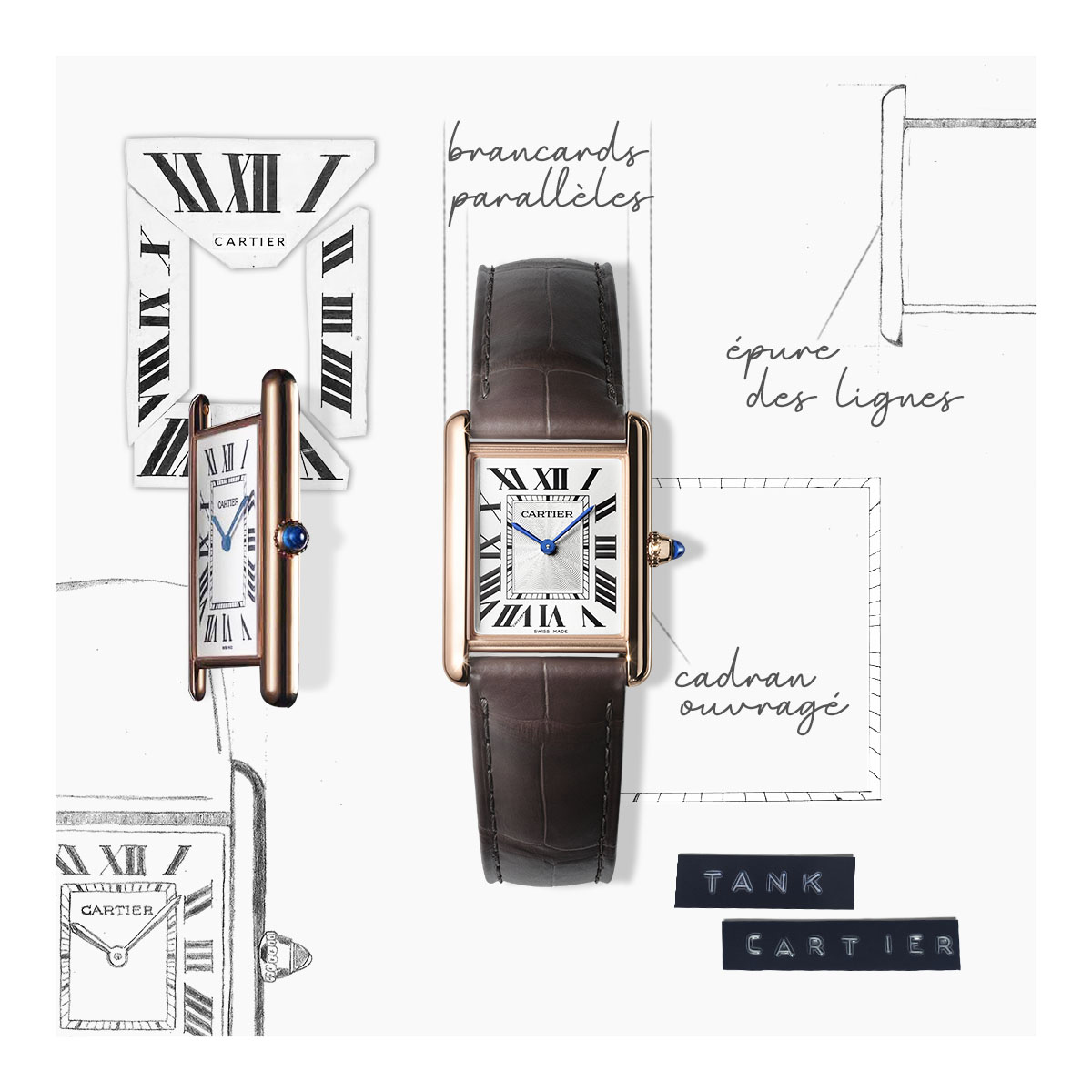
The Tank Louis Cartier owes its enduring appeal to its unmistakably inspired aesthetic details, such as the brancards (vertical sidebars) representing a tank’s treads and the case, symbolic of its turret.
The military precision extends not just to its appearance but also to its hidden interior mechanisms, which have made the Tank a true and powerful leader in watchmaking today.
When the Tank was introduced in 1917, watches had traditionally been round. Its innovative design, inspired by the shape of a tank viewed from above, sparked a powerful legacy in watchmaking.
The design of the Tank begins with a stark silhouette: a rectangular structure, geometric lines and a pure profile, all anchored by the signature of the Tank watch: its pair of parallel sidebars, known as “brancards”.
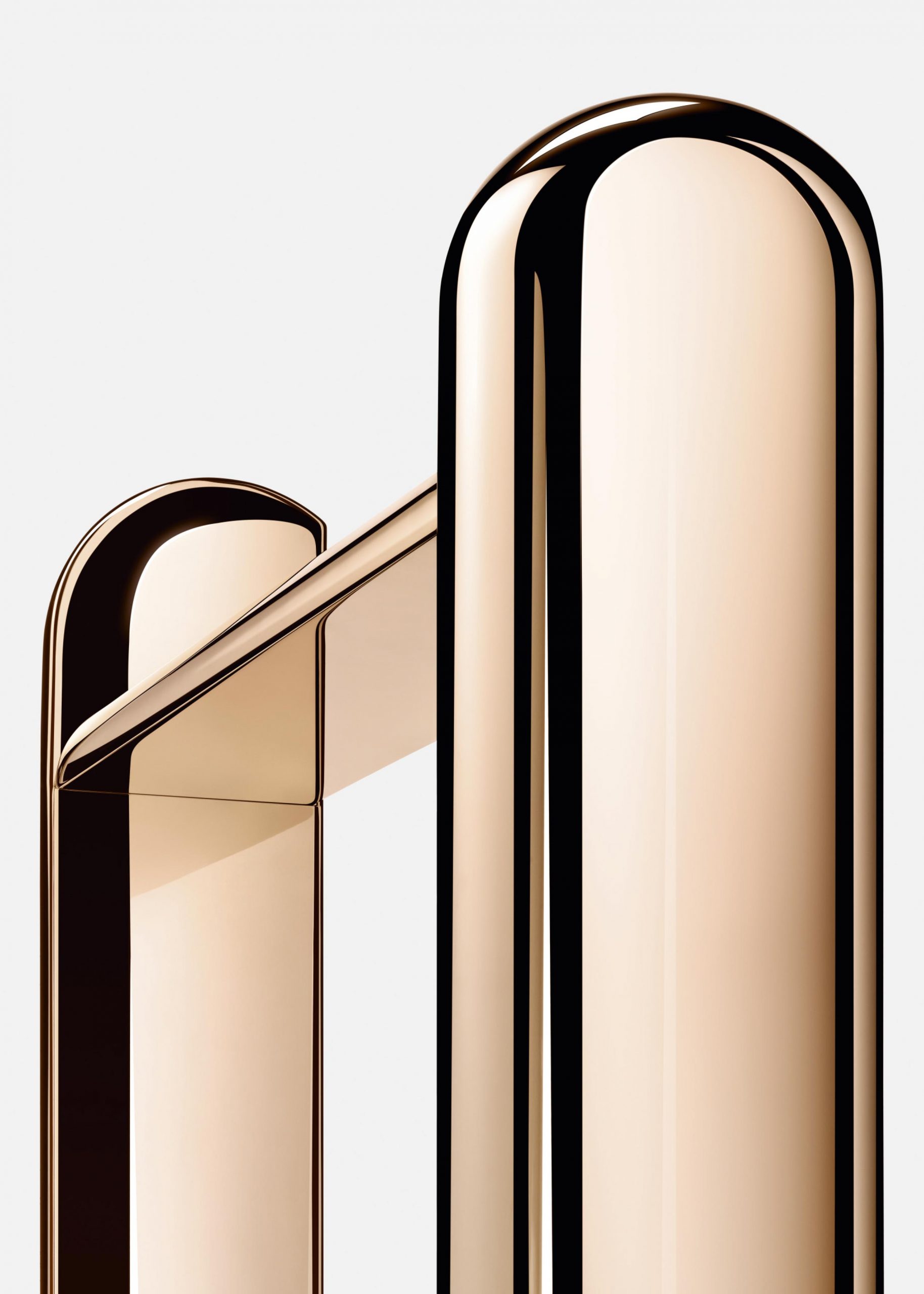
The Tank’s case attachments fit perfectly into the extension of the bracelet, without disrupting the line of the watch.
The dial is distinguished by a variety of motifs: Roman numerals, railway tracks and blue, sword-shaped hands. Cartier’s emblem is subtly concealed in one of the Roman numerals.
The Tank’s mechanism, entirely developed and manufactured by Cartier, features automatic winding. Because of its barrel-like shape and small size, Cartier’s trademark MC manual movement, developed in 1917, is well-suited to watches of all shapes and sizes, not to mention water-resistant up to depths of 98 feet.
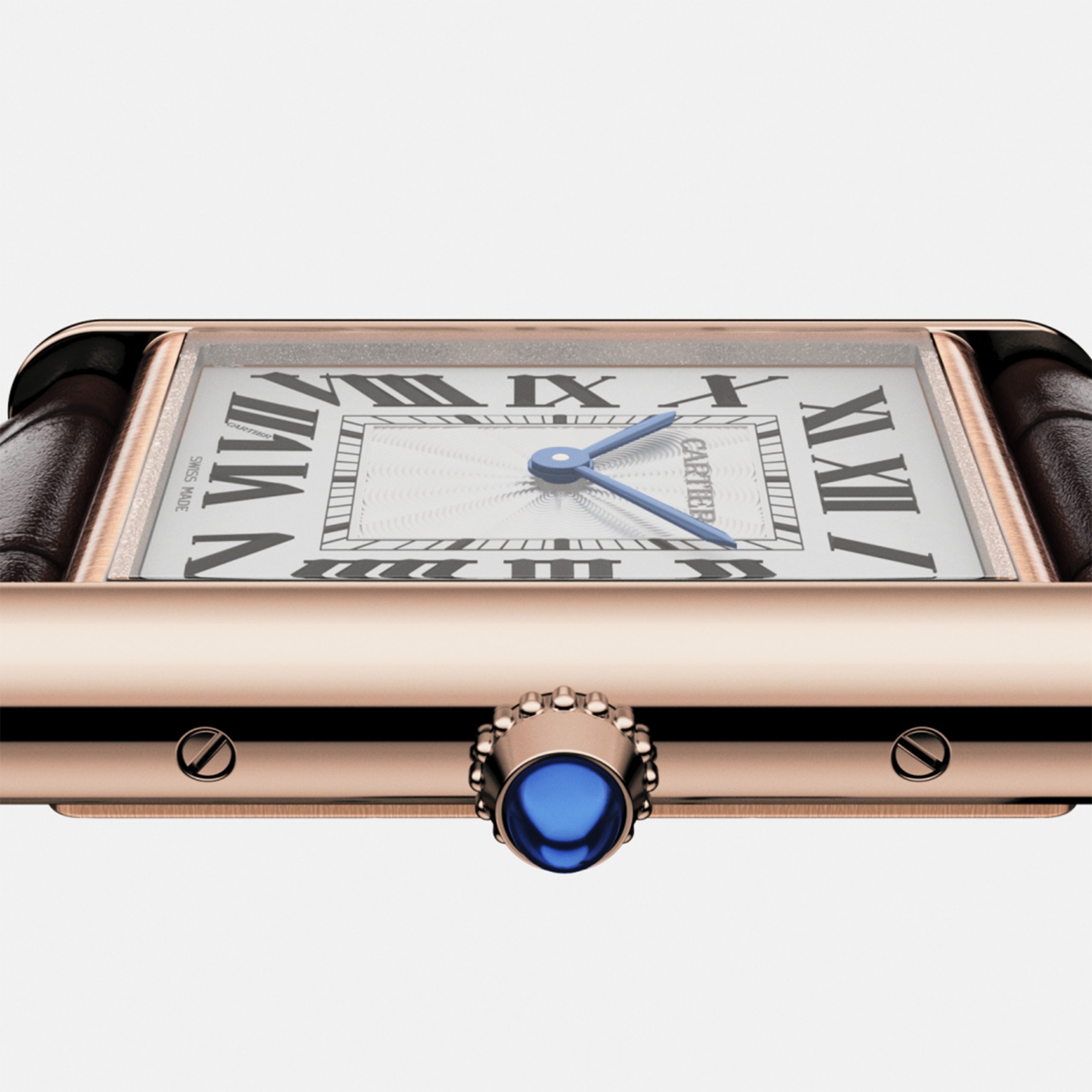
The interplay of metal on the case underscores the sophistication of the watch: the vertical stretchers are polished, while the horizontal stretchers feature a satin finish.
The winder is distinguished by a pearled or octagonal crown, set with either a cabochon sapphire or blue spinel, depending on the model.
The assembly of Cartier watch hands requires more than 20 steps. Their distinctive blue shade is a result of the oxidation of the steel, with the temperature causing fine variations in colour. Obtaining the right hue is dependent on extremely precise adjustments during oxidation, down to the second. This process is a hallmark of the oldest watchmaking traditions.
The Tank is now available in 58 models for women, large and small, with different straps, in leather, gold or mesh: Louis Cartier Tank, American Tank, French Tank, Solo Tank and Curved Tank. You are bound to find the Tank of your dreams.

Inspired by a bird’s eye sketch of a military tank on the battlefields of WWI, Louis Cartier created the Tank watch in 1917.
Over a century since its first iteration, the iconic style is considered one of the most outstanding designs in the history of watchmaking. “It’s a watch that I wish I had designed,” notes renowned couturier Jean-Charles de Castelbajac. “As a fashion icon, the Tank is a temple: a temple of good taste. At over 100 years old, the Tank is timeless.”
The Tank Louis Cartier owes its enduring appeal to its unmistakably inspired aesthetic details, such as the brancards (vertical sidebars) representing a tank’s treads and the case, symbolic of its turret.
The military precision extends not just to its appearance but also to its hidden interior mechanisms, which have made the Tank a true and powerful leader in watchmaking today.
When the Tank was introduced in 1917, watches had traditionally been round. Its innovative design, inspired by the shape of a tank viewed from above, sparked a powerful legacy in watchmaking.
The design of the Tank begins with a stark silhouette: a rectangular structure, geometric lines and a pure profile, all anchored by the signature of the Tank watch: its pair of parallel sidebars, known as “brancards”.
The Tank’s case attachments fit perfectly into the extension of the bracelet, without disrupting the line of the watch.
The dial is distinguished by a variety of motifs: Roman numerals, railway tracks and blue, sword-shaped hands. Cartier’s emblem is subtly concealed in one of the Roman numerals.
The Tank’s mechanism, entirely developed and manufactured by Cartier, features automatic winding. Because of its barrel-like shape and small size, Cartier’s trademark MC manual movement, developed in 1917, is well-suited to watches of all shapes and sizes, not to mention water-resistant up to depths of 98 feet.
The interplay of metal on the case underscores the sophistication of the watch: the vertical stretchers are polished, while the horizontal stretchers feature a satin finish.
The winder is distinguished by a pearled or octagonal crown, set with either a cabochon sapphire or blue spinel, depending on the model.
The assembly of Cartier watch hands requires more than 20 steps. Their distinctive blue shade is a result of the oxidation of the steel, with the temperature causing fine variations in colour. Obtaining the right hue is dependent on extremely precise adjustments during oxidation, down to the second. This process is a hallmark of the oldest watchmaking traditions.
The Tank is now available in 58 models for women, large and small, with different straps, in leather, gold or mesh: Louis Cartier Tank, American Tank, French Tank, Solo Tank and Curved Tank. You are bound to find the Tank of your dreams.